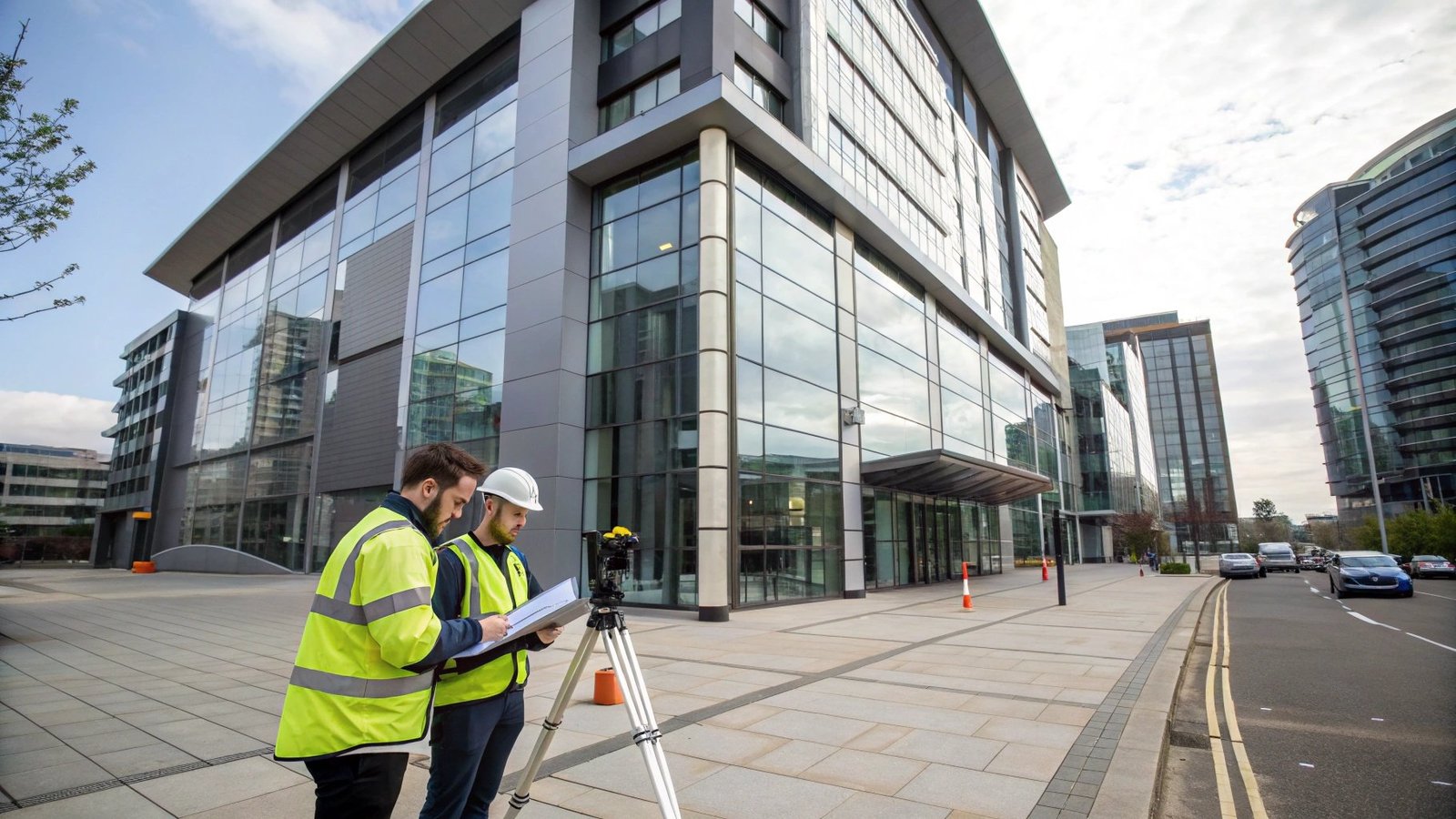
Buying or leasing commercial property is fundamentally different from residential transactions. The stakes are higher, the costs greater, and the consequences of getting it wrong can cripple a business. Yet many business owners underestimate the importance of professional surveys.
As RICS surveyors in Preston with extensive experience assessing commercial premises across Lancashire - from retail units and offices to warehouses and industrial units - we've seen how proper surveying protects businesses from costly mistakes. This comprehensive guide explains everything you need to know.
Why Commercial Surveys Are Different
Residential vs Commercial: Key Differences
| Aspect | Residential | Commercial |
|---|---|---|
| Focus | Structural integrity, habitability | Fitness for business purpose, compliance, liabilities |
| Regulations | Building regs, safety standards | Plus: DDA, fire safety, H&S, environmental, planning use |
| Lease issues | Rare (most buy freehold) | Common - dilapidations, repair obligations critical |
| Survey cost | £400-£1,500 | £1,000-£10,000+ |
| Consequences of problems | Inconvenience, expense | Business failure, trading prohibition, huge liabilities |
Why Business Owners Skip Surveys (And Shouldn't)
Common but dangerous reasoning:
- "It looks fine, we walked around" - Visual inspection misses 70% of issues
- "We're only leasing, it's not our problem" - Wrong! Lease obligations can bankrupt you
- "Surveys are expensive" - Compared to the cost of undiscovered problems? Negligible
- "We're in a hurry to start trading" - Delays from undiscovered problems are far worse
- "The landlord will fix issues" - Only if specifically obliged to in lease
Real Preston example: A retail business in the city center signed a 10-year lease without survey. Within 6 months, they discovered the roof needed £35,000 repairs - their responsibility under the lease. They couldn't afford it and the business failed.
Types of Commercial Property Surveys
1. Building Survey / Condition Survey
Purpose: Comprehensive assessment of building condition
What It Covers:
- Structural condition: Walls, roof, foundations
- External elements: Rainwater goods, pointing, render
- Internal elements: Floors, ceilings, joinery
- Services: Electrical, plumbing, heating, ventilation
- Defects identification: Current and potential future issues
- Repair urgency: Immediate, short-term, long-term
- Cost estimates: Approximate repair costs
When Needed:
- Purchasing commercial freehold
- Taking long lease (15+ years)
- Lease renewal decision
- Older or obviously problematic buildings
- Before major refurbishment planning
Cost:
- Small unit (under 2,000 sq ft): £1,000-£2,500
- Medium premises (2,000-10,000 sq ft): £2,500-£5,000
- Large property/complex site: £5,000-£10,000+
2. Acquisition Survey
Purpose: Due diligence for property purchase
What It Covers:
Everything in building survey PLUS:
- Planning use classification: Permitted use verified
- Building regulations compliance: Extensions, alterations legal?
- Fire safety compliance: Current regulations met?
- DDA / Equality Act compliance: Accessibility requirements
- Asbestos risk assessment: Presence and management required
- Environmental issues: Contamination, flooding, radon
- Party wall matters: Shared boundaries and liabilities
When Needed:
- All commercial property purchases
- Especially if property will be modified
- When lender requires comprehensive report
Cost:
- £3,000-£8,000 typically
- Specialist reports (asbestos, etc.) additional
3. Dilapidations Survey
Purpose: Assess lease repair obligations
Three Types:
Schedule of Condition (Start of Lease):
- Photographic record of property condition
- Attached to lease as baseline
- Protects tenant from unfair end-of-lease claims
- Cost: £800-£2,500
- Essential: ALWAYS commission before taking lease
Interim Schedule (During Lease):
- Landlord's surveyor assesses compliance with repairing obligations
- Identifies required works
- Gives tenant opportunity to remedy before lease end
- Your response: Commission own surveyor to review claims
Terminal Schedule (End of Lease):
- Final assessment of dilapidations
- Landlord claims for breach of repairing covenants
- Can run to £50,000+ on larger premises
- Essential: Appoint surveyor to negotiate
Typical Dilapidations Issues:
- Repainting (internal and external)
- Floor covering replacement
- Ceiling repairs
- Mechanical and electrical servicing
- Roof repairs
- Removal of tenant alterations
Preston case study: An office tenant in Fishergate faced £72,000 dilapidations claim at lease end. Our surveyor negotiated this down to £24,000 by demonstrating overcharging and betterment (landlord profiting from improvements).
4. Valuation Survey
Purpose: Determine market value for purchase, sale, or refinancing
What It Covers:
- Market value assessment: What would it sell for?
- Comparable analysis: Similar properties recently sold
- Income potential: If investment property
- Lender requirements: Loan-to-value calculations
Valuation Methods:
- Comparable method: Similar property sale prices
- Investment method: Based on rental income and yield
- Residual method: Development potential minus costs
- Contractor's method: Rebuild cost (specialist properties)
Cost:
- £1,500-£5,000+ depending on complexity and value
5. Specific Purpose Surveys
Asbestos Survey
- Required: All commercial buildings built pre-2000
- Types: Management survey (standard) or refurbishment/demolition survey
- Cost: £300-£800
- Legal requirement: Must have asbestos register
Fire Risk Assessment
- Legal requirement: All commercial premises
- Cost: £400-£1,200
- Reassessment: Annually or after significant changes
Electrical Installation Condition Report (EICR)
- Frequency: Every 5 years (or 3 years for higher risk premises)
- Cost: £300-£800
- Legal requirement: Yes, plus insurance requirement
Energy Performance Certificate (EPC)
- Requirement: Must have minimum E rating to let/sell
- Cost: £100-£300
- Validity: 10 years
- 2027 onwards: Minimum B rating likely required
Key Issues in Commercial Property Surveys
Planning and Use Class
Critically important but often overlooked:
Use Classes (England):
- Class E: Commercial, business and services (shops, offices, cafes, etc.)
- Class F: Local community uses
- Sui Generis: Unique uses (pubs, hot food takeaways, car showrooms, etc.)
- Industrial: B2 (general), B8 (storage/distribution)
Critical Questions:
- Is current use lawful?
- Can you operate your intended business?
- Any planning conditions restricting operations?
- Previous enforcement action?
Real problem: A Preston business bought premises described as "suitable for restaurant" but planning use was retail only. Cost £8,000+ and 6 months to obtain change of use permission - business nearly failed before opening.
Building Regulations Compliance
Extensions and alterations without building control approval create huge problems:
Common Non-Compliance Issues:
- Mezzanine floors without structural calculations
- Fire escape routes inadequate
- Electrical work not certified
- Structural alterations without approval
- Change of use not formally completed
Consequences:
- Retrospective applications expensive and uncertain
- Insurance invalid
- Enforcement action possible
- Can't sell property
- Bank may withdraw funding
Fire Safety
Regulatory Reform (Fire Safety) Order 2005 makes business owners criminally liable:
Requirements:
- Fire risk assessment: Documented and regularly reviewed
- Fire detection: Adequate alarm system
- Escape routes: Sufficient, well-signed, kept clear
- Emergency lighting: Functional and tested
- Fire doors: Correct specification and maintained
- Firefighting equipment: Appropriate and serviced
- Staff training: Documented fire safety training
Survey Should Identify:
- Inadequate means of escape
- Missing or defective fire doors
- Lack of fire compartmentation
- Combustible materials in escape routes
- Inadequate fire detection
Cost implications: Bringing non-compliant premises up to standard can cost £10,000-£100,000+ depending on issues.
Disability Discrimination / Equality Act 2010
Business owners have legal duty to make reasonable adjustments:
Access Requirements:
- Entrance: Level or ramped access
- Doors: Adequate width, opening mechanisms
- Circulation: Corridors and rooms navigable
- WC facilities: Accessible toilet provision
- Signage: Appropriate for visual impairments
- Hearing loops: In customer-facing premises
"Reasonable Adjustments":
What's reasonable depends on:
- Building age and type
- Practical feasibility
- Cost vs business size
- Listed building status
Survey should identify accessibility barriers and recommend improvements.
Asbestos
Control of Asbestos Regulations 2012 places duties on building owners/occupiers:
Requirements:
- Asbestos survey: Identify presence and condition
- Asbestos register: Maintained and accessible
- Management plan: How asbestos will be managed
- Information provision: Anyone working on building must be informed
Cost Implications:
- Survey: £300-£800
- Encapsulation: £10-£30 per m²
- Removal: £50-£200+ per m²
- Neglect costs: Prosecution, unlimited fines, even imprisonment
Environmental Contamination
Particularly relevant for:
- Former industrial sites
- Brownfield developments
- Sites with previous contaminating uses (garages, dry cleaners, etc.)
Liability Issues:
- Owner liable for cleanup (even if they didn't cause it)
- Costs can exceed property value
- Lenders won't finance contaminated land without remediation plan
Survey implications: Environmental searches and specialist reports essential for industrial/commercial conversions.
Lease-Specific Survey Considerations
Understanding Lease Types
Full Repairing and Insuring (FRI) Lease
- Tenant responsibility: ALL repairs, maintenance, insurance
- Includes: Structural, external, internal, services
- Survey critical: You're responsible for everything - must know condition
- End of lease risk: Potentially massive dilapidations
Internal Repairing Lease
- Tenant responsibility: Internal repairs and decorations only
- Landlord responsibility: Structure, exterior, common parts
- Service charge: Contribution to landlord's costs
- Survey focus: Internal condition and service charge reasonableness
Schedule of Condition: Essential Protection
Why it's critical:
- Without it, you're liable to return property in perfect condition
- With it, you only maintain/improve upon recorded condition
- Can save tens of thousands at lease end
What It Should Include:
- Comprehensive photographic survey
- Detailed written description
- Note all existing defects, wear, damage
- Timestamp and professional authentication
- Formally attached to lease
Cost vs benefit: £1,000-£2,500 to commission, but can save £20,000-£100,000+ in dilapidations. Absolutely essential.
Service Charges
Often overlooked but can increase dramatically:
Survey Should Review:
- Recent service charge accounts (last 3 years)
- Planned major works (roof replacement, etc.)
- Sinking fund provisions
- Apportionment methodology (is it fair?)
- Management company performance
Red flags:
- Rapidly increasing charges
- Major works planned
- Inadequate sinking fund for building age
- Poor building maintenance (suggests deferred costs building up)
Survey Process and Timeline
Typical Commercial Survey Process
- Initial instructions (Week 1):
- Brief surveyor on intended use
- Provide lease/purchase documentation
- Agree scope and fee
- Site inspection (Week 1-2):
- Comprehensive property inspection (2-6 hours typically)
- Photographs and measurements
- May require return visits for specific access
- Desktop research (Week 2-3):
- Planning history
- Building control records
- Environmental searches
- Service charge accounts
- Specialist reports (Week 2-4):
- Asbestos survey if needed
- Structural engineer if concerns
- Electrical/mechanical surveys
- Environmental assessment
- Report drafting (Week 3-4):
- Comprehensive findings
- Cost estimates for remedial works
- Recommendations
- Report delivery (Week 4-5):
- Detailed written report
- Often followed by meeting to discuss
Timeline: 4-6 weeks typical for comprehensive commercial survey. Can be expedited if necessary but may cost more.
Costs and Value
What Influences Survey Costs?
- Property size: Larger = more expensive
- Complexity: Multi-tenanted, mixed-use, etc.
- Age and condition: Problematic buildings require more time
- Access issues: Multiple visits increase costs
- Specialist reports needed: Each adds to total
- Urgency: Rush jobs cost more
- Purpose: Acquisition surveys more comprehensive than simple condition reports
Typical Cost Ranges
| Property Type | Typical Survey Cost |
|---|---|
| Small retail unit (under 1,000 sq ft) | £1,000-£2,000 |
| Office suite (1,000-3,000 sq ft) | £1,500-£3,500 |
| Large retail/restaurant (3,000-5,000 sq ft) | £2,500-£5,000 |
| Industrial unit (5,000-10,000 sq ft) | £3,000-£6,000 |
| Large warehouse/complex site | £5,000-£15,000+ |
Return on Investment
Survey costs are tiny compared to potential issues:
- £3,000 survey identifies £50,000 structural repairs → negotiate price reduction or walk away
- £1,500 schedule of condition saves £40,000 dilapidations claim at lease end
- £2,500 acquisition survey reveals non-compliant planning use → saves business from closure
Perspective: Survey costs typically 0.5-2% of property value or annual lease cost. The risks they identify can be 10-50x the survey cost.
Questions to Ask Your Surveyor
When commissioning commercial surveys:
- What's your experience with this property type? (Retail, office, industrial, etc.)
- Are you RICS registered? (Essential for professional indemnity insurance)
- What exactly does your survey include? (Get detailed scope)
- What specialist reports might be needed? (And their costs)
- How long will it take? (Timeline critical for transactions)
- What format will the report take? (Ensure it meets lender/legal requirements)
- Will you provide cost estimates for identified issues?
- Can you advise on planning and building regulations?
- Are you available to discuss findings and attend meetings?
- What's your professional indemnity insurance level? (Should be adequate for property value)
Red Flags That Demand Surveys
Commission surveys urgently if:
- Property obviously altered/extended - compliance questions
- Previous commercial use very different - planning concerns
- Building pre-2000 - asbestos risk
- Industrial area or former industrial use - contamination risk
- Flat roof - common problem area
- Cracking, movement, or obvious disrepair
- Shared occupancy/multi-let building - complex repair liabilities
- Long lease commitment - decades of responsibility
- Landlord evasive about building condition
- No building plans/documentation available
Preston Commercial Property Context
Local Commercial Market
Preston offers diverse commercial property across:
- City center retail: Fishergate, Friargate - mix of modern and Victorian
- Office space: Fishergate, Ringway - ranging from serviced to period conversions
- Industrial estates: Walton Summit, Fulwood - modern units
- Warehouse/distribution: M6 corridor - large logistics facilities
- Local retail: Suburbs and villages - smaller units
Common Preston Commercial Issues
- Victorian conversions: Beautiful but often non-compliant for modern commercial use
- Post-war buildings: Concrete frame structures with deterioration issues
- Industrial estates: Asbestos roofing common in 1970s-90s units
- Flood risk: Areas near River Ribble require assessment
- Conservation areas: Restrictions on external alterations
Conclusion: Protect Your Business Investment
Commercial property surveys are not optional extras - they're essential business risk management. The cost is minimal compared to the protection they provide.
Key Takeaways:
- Commercial surveys differ fundamentally from residential
- Multiple survey types exist - choose appropriate for your situation
- Schedule of condition essential before signing any lease
- Planning use, building regulations, and compliance critical
- FRI leases require comprehensive surveys - you're responsible for everything
- Dilapidations can bankrupt businesses - proper surveys protect you
- Survey costs are 0.5-2% of value but identify risks 10-50x greater
- Use RICS qualified surveyors with commercial experience
As RICS surveyors serving Preston and Lancashire, we've helped countless businesses avoid costly mistakes through professional surveys. Whether you're buying your first retail unit or expanding into larger premises, proper surveying protects your business and your investment.
Planning Commercial Property Purchase or Lease?
Our experienced RICS surveyors provide comprehensive commercial property surveys across Preston and Lancashire. From retail units and offices to industrial warehouses, we identify risks, assess compliance, and protect your business investment.
Get Commercial Survey Quote